




If It’s Your First Time Making Shoes, Confirm the Structure First
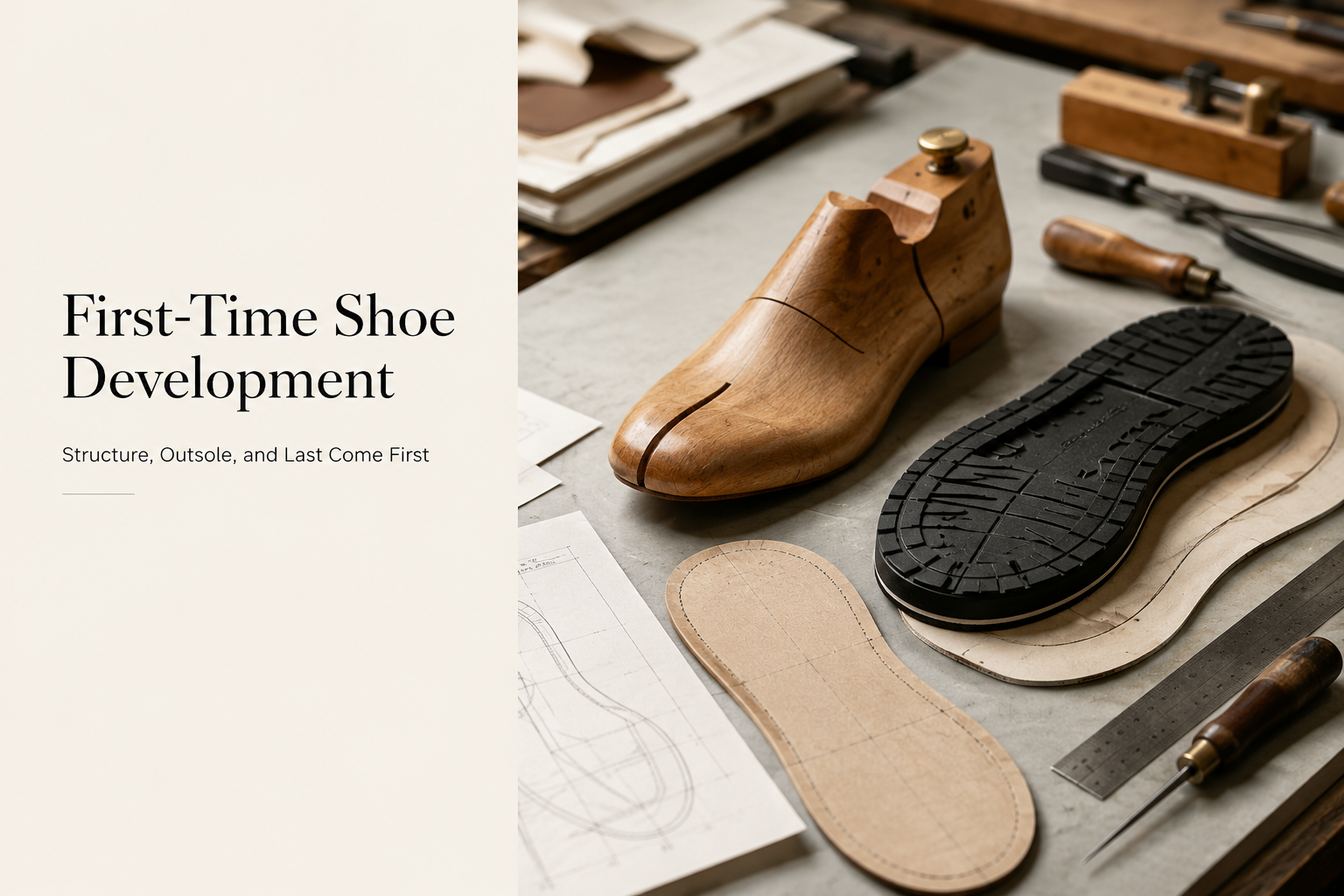
When a brand makes shoes for the first time, the easiest mistake is to focus too early on design. That is understandable, because design is the most visible part. But shoes are not like apparel. With clothing, it is often possible to adjust pattern, fabric, and details step by step. Shoes work differently. From the beginning, they are a structure-based product. They do not become wearable simply because the upper looks good. The construction, the outsole, the last, and the way all parts work together decide whether the shoe can actually stand as a product.
That is why the first question should not be how unique the design should be. The first question should be what kind of construction the shoe needs.
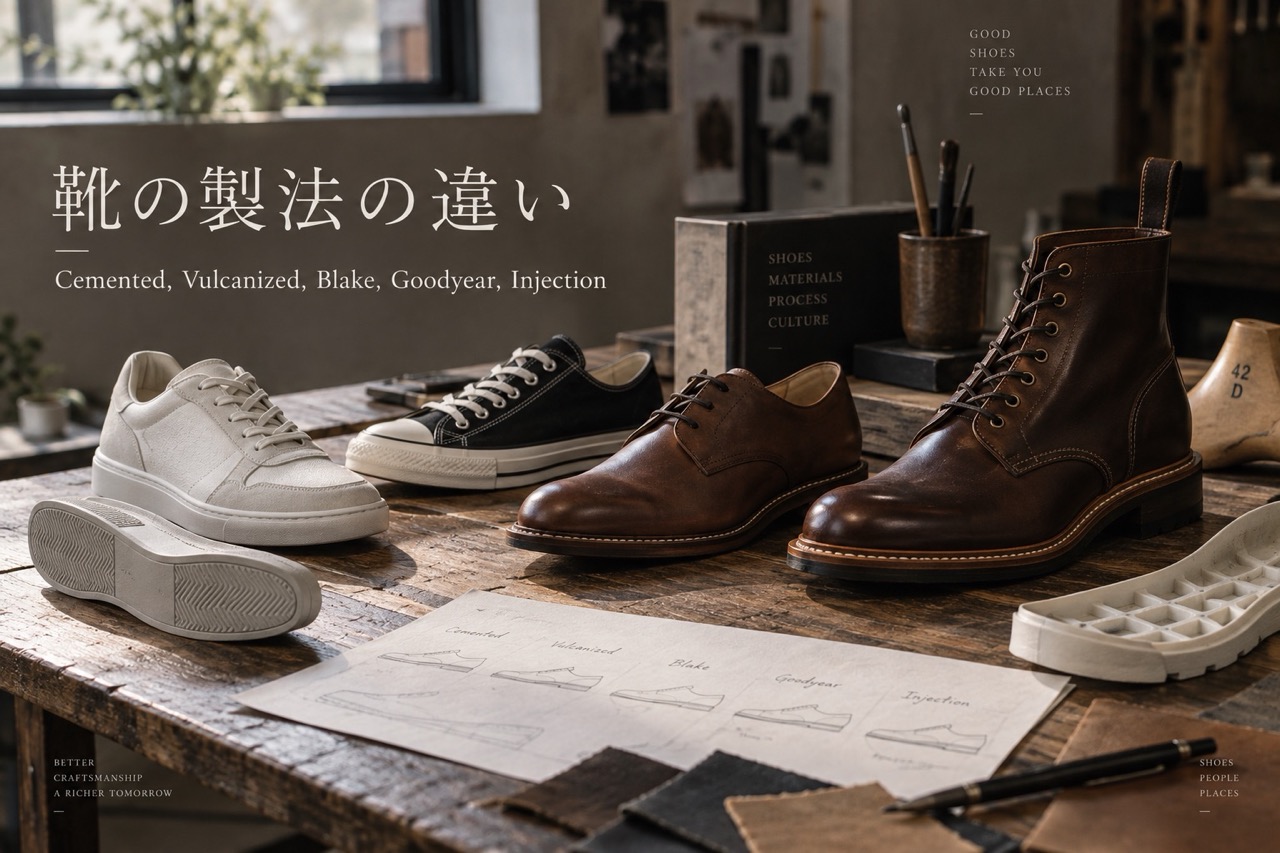
For beginners, one of the most important distinctions is cold cement versus vulcanized construction. These are not just two names for similar shoes. They represent two different development paths. In cold cement shoes, the upper is lasted first, and then the finished outsole is bonded to the shoe with adhesive. In vulcanized shoes, rubber parts are cured together with the shoe during the vulcanization process. The result is not only a different way of making the shoe, but also a different material logic, outsole logic, and development logic.
This matters because the product direction already begins to separate here. If the project is a modern sneaker with mesh, foam, EVA, TPU, and a lighter performance-oriented direction, cold cement is usually the more realistic route. If the goal is more in the direction of classic canvas shoes, skate shoes, or styles with strong rubber foxing and a traditional casual look, then vulcanized construction is often closer to the right answer. If this choice is not made clearly at the beginning, many later decisions become inefficient.
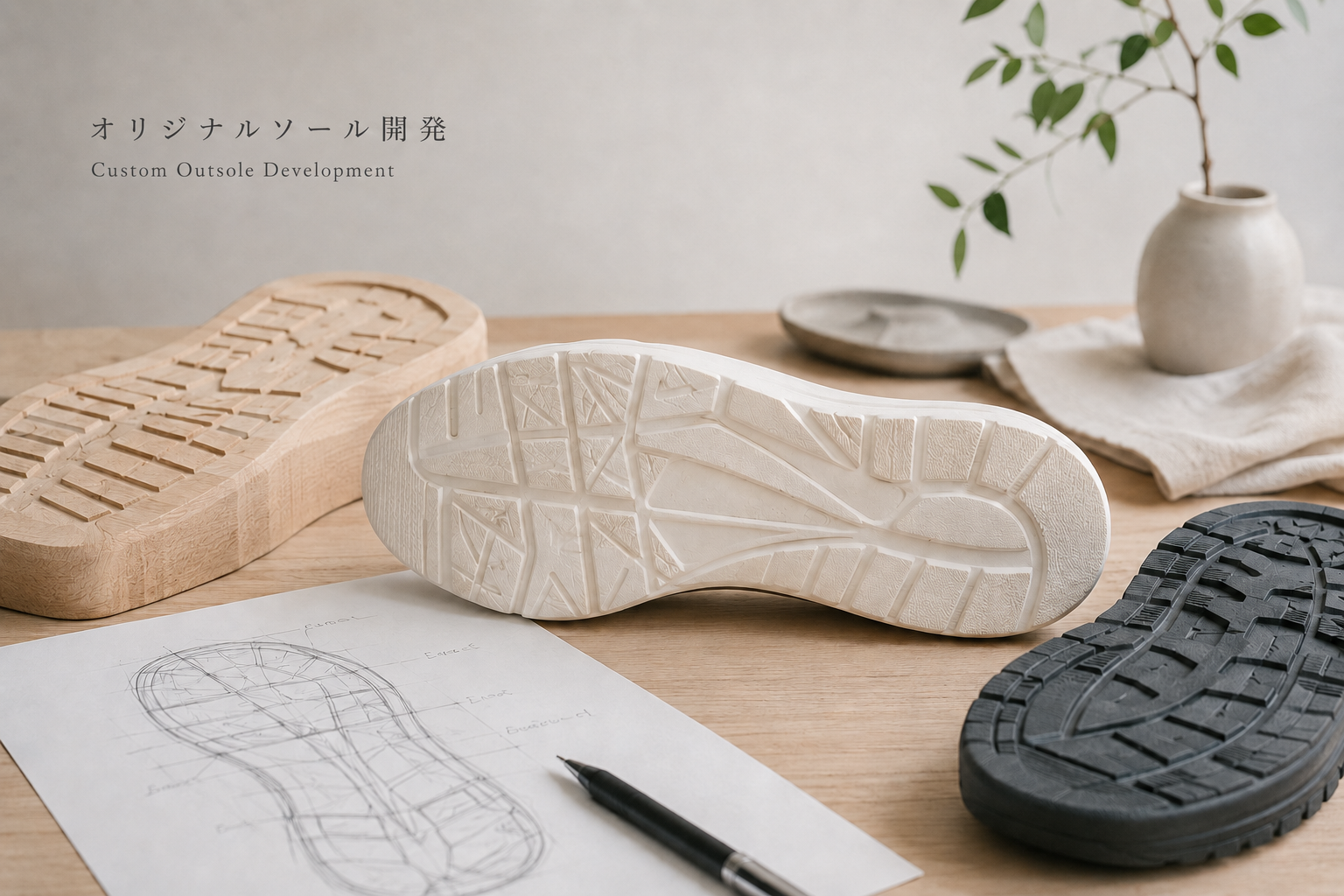
After structure, the next thing to take seriously is the outsole. This is where shoes differ greatly from apparel. In clothing, a product can still be adjusted relatively flexibly after material selection. In footwear, once the outsole direction is wrong, the whole product usually starts going in the wrong direction with it. The outsole is not just a visible part. It affects the silhouette, the comfort base, the visual weight, the way the shoe sits on the ground, and the overall impression of the product.
That is also why first-time projects should usually be careful about tooling. Many brands immediately want their own unique outsole, but outsole development is not as simple as drawing a shape. It usually involves mold cost, material decisions, engineering limits, color separation, durability, and production feasibility. For a first project, using an existing outsole or a more universal outsole option is often the smarter route. Once the product has market response and stronger volume potential, developing a fully original outsole becomes easier to justify.
The last is the next major point, and many beginners underestimate it. In reality, the last controls much more than appearance. It influences the fit, the proportions, the toe shape, the instep feeling, the heel hold, and the overall wearing balance. A shoe is not built from a flat drawing alone. The upper has to be pulled over a last and formed into an actual shoe shape. That means the last is not a secondary issue. It is one of the foundations of the product.
This is why “looking like the reference image” should never be the only target. A shoe can look visually close to the sketch and still feel wrong on foot. If the last is not right, the pattern will not sit correctly, the upper may not form naturally, and the final fit may feel unstable. For a first project, it is often better to spend more time confirming whether the last direction is correct than to spend too much time refining decorative details too early.
Material choice also has to follow the construction logic. Not every material behaves the same way in every shoe process. Some materials work much better in cold cement construction than in vulcanized construction. Some trims, plastics, and surface treatments are fine in one system and risky in another. In other words, materials should not be chosen only because they look good. They need to be judged together with the construction method.
Sample development also needs to be understood correctly. A first sample is not there only to check whether the shoe looks like the idea. It is there to check whether the whole logic of the shoe works. Is the structure right? Does the last direction make sense? Does the upper sit properly after lasting? Does the outsole match the shoe naturally? Does the fit feel acceptable? Can the idea be scaled into production? These are the questions that matter.
There is one more point that beginners should accept early: shoes are not display objects. They are worn on the ground. They bend, get dirty, crease, and take pressure in daily use. That does not mean quality should be ignored. It means the real standard should be whether the shoe remains stable, wearable, and convincing under normal use. A shoe should not be judged only by how it looks in photos. It should be judged by whether it works as a shoe.
So if this is your first footwear project, the most practical order is simple. Confirm the construction first. Then confirm the outsole direction. Then confirm the last. After that, move into materials and design refinement. The first goal is not to make the most unique shoe possible. The first goal is to make one shoe that truly works. Once that happens, future development becomes much easier.
Related Posts