




How Embroidery Affects Apparel OEM Cost, MOQ, and Production Lead Time
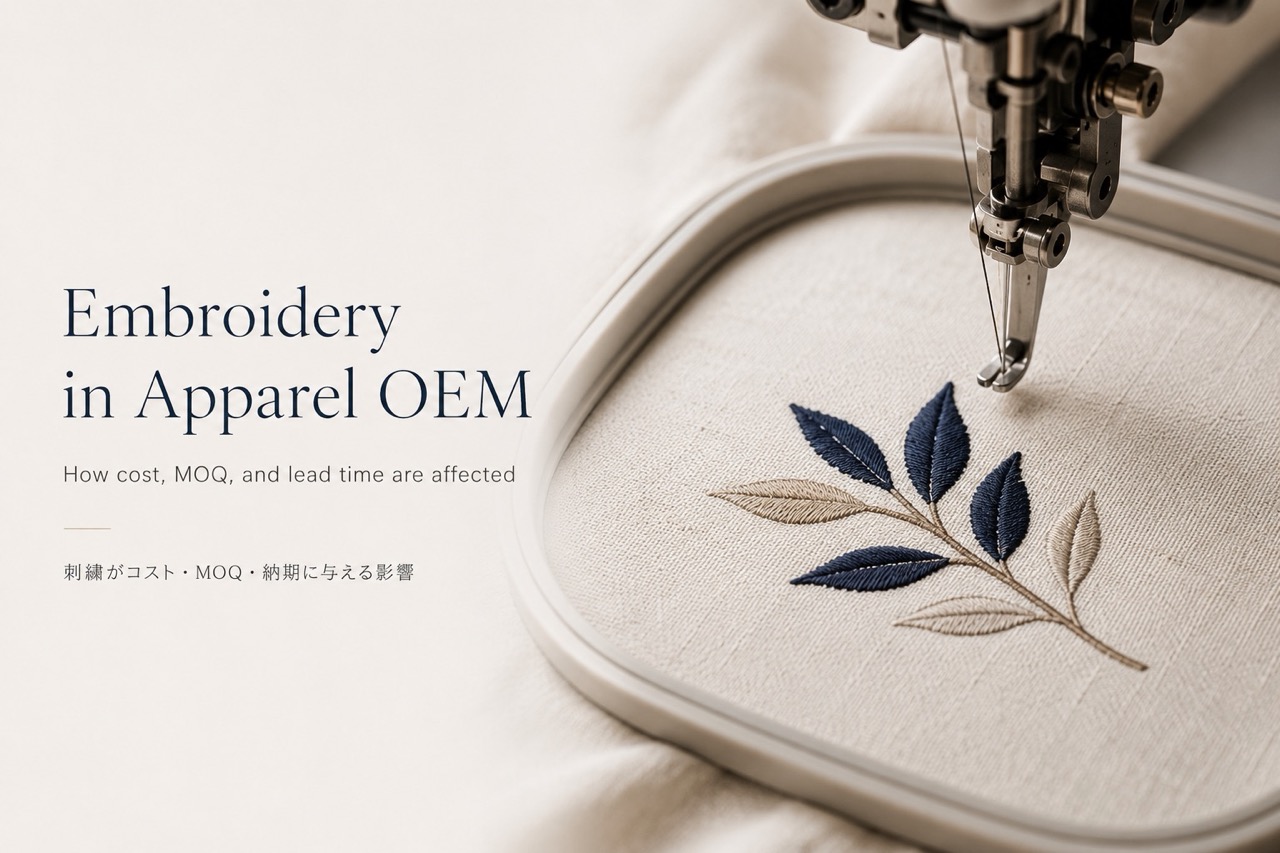
In apparel OEM production, embroidery is often considered a simple decorative technique. However, in real manufacturing processes, embroidery is a technical variable that directly affects cost, MOQ, sampling stability, and production lead time.
For brands developing apparel in China, understanding how embroidery influences production is essential before finalizing design decisions.
1. Embroidery is a production variable, not just decoration
Embroidery is not only a visual element. It is a controlled production process involving machine time, thread density, fabric tension, and stitching stability.
Even a small embroidered logo can significantly change production conditions compared to plain fabric garments.
---
2. How embroidery affects cost
Embroidery cost is mainly determined by:
- Stitch density (number of stitches per area)
- Embroidery size and placement
- Number of colors used
- Machine operation time
Higher density or larger embroidery areas increase machine time, which directly increases production cost per unit.
In many cases, embroidery cost is not proportional to garment cost but is calculated separately based on complexity.
---
3. How embroidery affects MOQ
MOQ is not only determined by garment production, but also by embroidery setup requirements.
Embroidery often requires:
- Digital embroidery file setup (programming cost)
- Machine adjustment time
- Thread color preparation
If multiple embroidery positions or color variations are involved, MOQ usually increases because production efficiency decreases.
---
4. How embroidery affects sampling
Sample development becomes more complex when embroidery is involved.
This is because:
- Stitch accuracy must be tested on actual fabric
- Fabric tension can affect embroidery shape
- Placement may shift after washing or pressing
Therefore, embroidery samples often require multiple revisions before approval.
---
5. How embroidery affects production lead time
Embroidery adds additional production steps before sewing and assembly:
- File digitizing
- Machine setup
- Thread preparation
- Test stitching
If embroidery is complex, it can become a bottleneck in the production schedule, extending overall lead time.
---
6. Material compatibility matters
Not all fabrics are suitable for embroidery.
Soft or stretchy fabrics may distort under stitching tension, while thick or coated fabrics may require special needles or slower machine speed.
This is why embroidery decisions must be made together with fabric selection, not after design finalization.
---
7. Conclusion
Embroidery is not a secondary decoration process in apparel OEM production. It is a structural production factor that directly influences cost, MOQ, sampling stability, and lead time.
Brands that understand this early can avoid unnecessary revisions and production delays.
At Asahihara Trading, we support apparel OEM and ODM projects in China including sampling, fabric sourcing, embroidery coordination, production management, QC, and bulk production follow-up.
Understanding embroidery complexity in advance helps ensure smoother production execution.
Related Posts