




How a Custom Shoe Outsole Mold Is Made: From Design to Trial Outsole
A custom outsole can define the overall character of a shoe. Its thickness, side profile, bottom pattern, and proportions affect not only appearance, but also how the upper and outsole work together as a complete product.
When a brand develops an original outsole, the process does not usually begin with formal mold making. The outsole design must first be translated into a full-size physical master model. Once the shape has been reviewed and approved, the outsole factory can proceed with the production mold.
The exact process may vary depending on the outsole material, construction method, size range, and factory. However, the general development flow is relatively straightforward.
### 1. Confirm the brand’s requirements
The first step is to understand the intended outsole design.
The brand may provide a design drawing, reference shoe, product image, hand sketch, or general design direction. Based on this information, the main requirements are confirmed, including:
- overall outsole shape;
- thickness and volume;
- sidewall profile;
- bottom tread pattern;
- logo position and size;
- color and material direction;
- intended shoe category.
The outsole should be considered together with the upper design.
For example, a thick and heavy outsole may work well with a voluminous sneaker or boot. A slimmer upper may require a lighter and more balanced outsole profile.
Clarifying these points at the beginning helps reduce unnecessary revisions later.
### 2. Create the outsole design
After the direction has been confirmed, the outsole design is prepared.
The design normally shows the side profile, bottom pattern, overall outline, logo placement, and other visible details.
Depending on the outsole factory and the design, technical drawings or 3D data may also be used during development. However, a drawing or digital model alone does not always show exactly how the outsole will feel and look as a physical object.
The outsole should therefore be reviewed as part of the complete shoe rather than as an isolated component.
The shape must work visually with the upper, toe profile, heel volume, and overall silhouette. An outsole that looks attractive by itself may still appear unbalanced after it is combined with the upper.
Once the basic design has been approved, the next step is to produce the physical master model.
### 3. What is a wooden outsole master model?
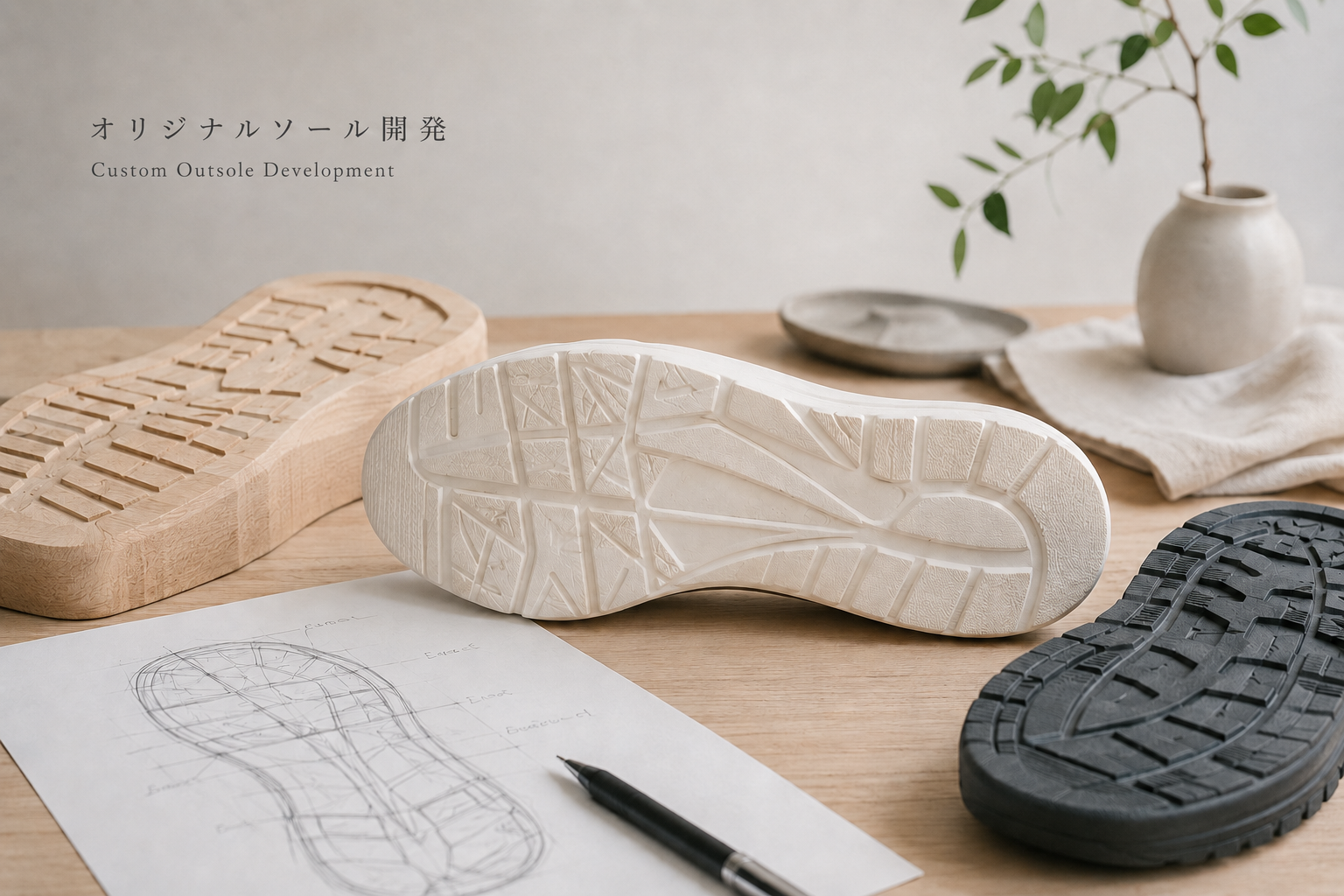
A wooden outsole master model is a full-size physical prototype made according to the approved outsole design.
Traditionally, this master model is made from wood. Its purpose is to convert the flat outsole design into a three-dimensional object that can be handled, viewed from different angles, and checked before formal mold making begins.
The wooden outsole master model is not the final production mold.
It should also not be confused with the shoe last. The shoe last determines the internal shape, volume, and fit of the shoe, while the outsole master model represents the external shape of the outsole.
The master model allows the brand and outsole factory to review:
- the overall outsole shape;
- outsole thickness;
- toe and heel proportions;
- sidewall lines;
- bottom tread pattern;
- logo size and position;
- the balance between the outsole and upper design.
A two-dimensional drawing cannot always show how thick, curved, sharp, or voluminous the outsole will appear in real life.
The physical master model makes these points easier to understand before the more expensive production mold is made.
### 4. Confirm and revise the master model
After the wooden outsole master model has been completed, it is reviewed before formal mold making begins.
The brand should confirm the overall shape, thickness, side profile, tread pattern, logo, and visual proportions.
When necessary, the master model can also be checked together with the upper design or shoe last to evaluate the direction of the finished shoe.
At this stage, the brand may find that:
- one area looks too thick or too thin;
- the toe or heel volume is not balanced;
- the sidewall line needs adjustment;
- the bottom pattern is too deep or too simple;
- the logo position or size needs to be changed;
- the outsole does not match the upper as expected.
These changes are generally easier to make at the master-model stage than after the production mold has already been completed.
Once the wooden outsole master model has been approved, it becomes the main physical reference for formal mold making.
### 5. Make the formal production mold
After the master model has been approved, the outsole factory begins making the formal production mold.
The confirmed outsole shape, side profile, bottom pattern, logo, and surface details are transferred into the mold. This mold will be used to manufacture the actual outsoles.
At this stage, the basic design should already be fixed.
Major design changes after mold making has started may require mold modification. In some cases, a new mold may need to be made.
This can result in additional cost and a longer development schedule. For this reason, the brand should review the wooden outsole master model carefully before giving final approval.
### 6. Produce and review the trial outsole
Once the mold has been completed, the outsole factory produces the first trial outsole.
The purpose of the trial is to confirm whether the finished outsole correctly reproduces the approved master model.
The main points to review include:
- overall shape;
- tread-pattern definition;
- logo clarity;
- surface finish;
- color;
- molding quality;
- visible differences from the approved master model.
Minor adjustments may still be required if the molded outsole does not fully match the intended result.
After the trial outsole has been approved, it can be combined with the upper to produce a complete shoe sample.
This step is important because the outsole should not only look correct by itself. It must also work with the upper, shoe last, materials, and construction method.
The complete shoe sample is therefore the final opportunity to evaluate the overall balance before moving toward bulk production.
### What affects outsole mold cost and lead time?
The total mold cost and development schedule depend on several factors, including:
- outsole material;
- production method;
- number of sizes;
- outsole structure;
- design complexity;
- tread and logo detail;
- number of revisions required.
A simple one-piece outsole is generally different from a multi-component outsole using several materials or separate molded parts.
For this reason, mold cost and lead time can only be estimated accurately after the outsole design, material direction, size range, and construction have been confirmed.
### Conclusion
The general process for developing a custom shoe outsole is:
Brand requirements → Outsole design → Wooden outsole master model → Model confirmation and revision → Formal mold making → Trial outsole → Complete shoe sample
The wooden outsole master model is an important confirmation stage between the design and the formal production mold.
It allows the brand to review the actual three-dimensional shape before committing to production tooling. Careful confirmation at this stage can reduce unnecessary mold revisions, additional costs, and development delays.
At Asahihara Co., Ltd., we support custom footwear OEM and ODM projects in China, including outsole design coordination, master-model confirmation, mold development, shoe sampling, material sourcing, production follow-up, and quality control.
Brands planning to develop an original outsole can contact us with reference images, product category, expected order quantity, size range, material direction, and target schedule.
Related Posts